Introduction
Selecting the right managed Kubernetes platform plays a major role in ensuring high performance, cost efficiency, scalability, and a sustainable long-term cloud strategy. When evaluating EKS vs AKS vs GKE, it becomes important to understand how each platform supports modern containerized applications. If you’re building a multi-cloud or cloud-native architecture, clearly understanding the differences between Amazon Elastic Kubernetes Service, Azure Kubernetes Service, and Google Kubernetes Engine can help you choose the right solution.
In this guide, we explore the key differences in EKS vs AKS vs GKE by examining their core features, pricing models, networking capabilities, security mechanisms, DevOps integrations, and real-world use cases to help you make an informed decision.
Amazon EKS (AWS)
Amazon Elastic Kubernetes Service (EKS) is AWS’s fully managed Kubernetes service offering deep integration with AWS ecosystem services.
Key Features
- Fully managed control plane across multiple AZs
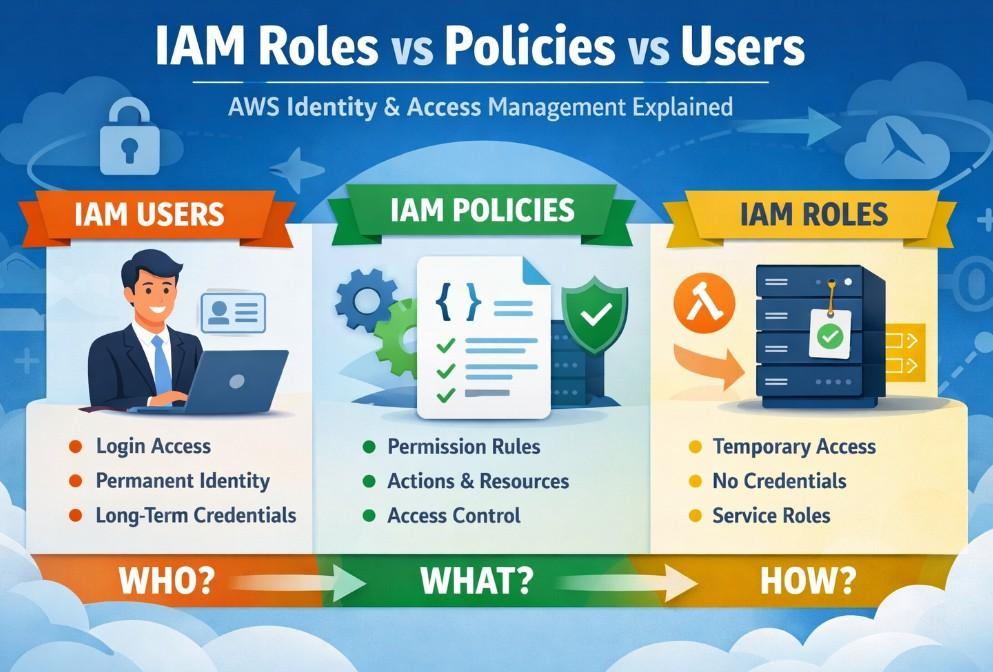
- Native integration with IAM
- Supports EC2 and Fargate
- IRSA (IAM Roles for Service Accounts)
- Extensive ecosystem & marketplace
Pros
- Strong security & IAM integration
- Mature ecosystem
- Best for AWS native workloads
- High availability by default
Cons
- Slightly complex setup for beginners
- Additional control plane cost
Best For
Organizations heavily invested in AWS services like S3, RDS, and Lambda.
Azure AKS (Microsoft Azure)
Azure Kubernetes Service (AKS) is Microsoft’s managed Kubernetes platform optimized for enterprise and hybrid cloud environments.
Key Features
- Free control plane (in standard tier)
- Deep integration with Azure AD
- Built in monitoring via Azure Monitor
- Windows container support
- Native CI/CD via Azure DevOps
Pros
- Cost effective
- Excellent hybrid support
- Strong enterprise integration
- Easy cluster setup
Cons
- Networking complexity in advanced scenarios
- Slightly slower feature rollouts compared to GKE
Best For
Enterprises using Microsoft ecosystem (Active Directory, Windows Server, .NET apps).
Google GKE (Google Cloud)
Google Kubernetes Engine (GKE) is Google’s managed Kubernetes offering. Since Kubernetes was originally developed by Google, GKE is often considered the most mature implementation.
Key Features
- Autopilot mode
- Advanced autoscaling
- Native Istio & service mesh
- Strong DevOps & CI/CD support
- Industry leading reliability
Pros
- Most Kubernetes native experience
- Fast feature updates
- Excellent autoscaling
- Strong performance optimization
Cons
- Slight learning curve for networking
- Pricing complexity in large scale deployments
Best For
Cloud native startups and organizations prioritizing Kubernetes first innovation.
EKS vs AKS vs GKE
| Feature | EKS | AKS | GKE |
|---|---|---|---|
| Control Plane Cost | Paid | Free (Standard) | Paid |
| Auto Scaling | Yes | Yes | Advanced |
| IAM Integration | AWS IAM | Azure AD | Google IAM |
| Windows Support | Limited | Strong | Limited |
| Autopilot Mode | No | No | Yes |
| Hybrid Support | Via Outposts | Strong | Anthos |
| DevOps Integration | CodePipeline | Azure DevOps | Cloud Build |
Security Comparison
| Security Feature | EKS | AKS | GKE |
|---|---|---|---|
| RBAC | Yes | Yes | Yes |
| IAM Integration | Strong | Strong | Strong |
| Private Clusters | Yes | Yes | Yes |
| Pod Identity | IRSA | Managed Identity | Workload Identity |
All three platforms offer enterprise-grade security, but implementation differs based on cloud-native identity systems.
Performance & Scalability
- GKE leads in Kubernetes-native innovation and autoscaling.
- EKS performs best when tightly integrated with AWS networking and compute.
- AKS excels in hybrid enterprise scenarios.
Which One Should You Choose?
Organizations that primarily operate within the AWS ecosystem may find Amazon Elastic Kubernetes Service a strong fit, especially when deep IAM integration, AWS Fargate support, and advanced AWS networking capabilities are required.
For businesses heavily invested in the Microsoft ecosystem, Azure Kubernetes Service can be a practical option. It works well for enterprises running Windows based workloads and offers the advantage of a lower control plane cost.
Meanwhile, teams looking for advanced Kubernetes innovation and automation may prefer Google Kubernetes Engine. Its Autopilot mode and strong scaling capabilities make it suitable for organizations prioritizing automation and high-performance workloads.
Conclusion
Choosing between Amazon Elastic Kubernetes Service, Azure Kubernetes Service, and Google Kubernetes Engine ultimately depends on your organization’s existing cloud ecosystem, operational requirements, and long term scalability goals.
Each platform offers a powerful managed Kubernetes environment with strong security, automated cluster management, and seamless integration with their respective cloud services. While Amazon EKS integrates deeply with the AWS ecosystem, Azure AKS provides strong enterprise and hybrid cloud capabilities, and Google GKE delivers a highly optimized Kubernetes experience with advanced automation features.
Rather than focusing on which platform is “better,” the key is selecting the one that best aligns with your infrastructure strategy, team expertise, and application architecture. By evaluating factors such as cost, integrations, scalability, and operational complexity, organizations can choose the managed Kubernetes service that supports both current workloads and future cloud growth.
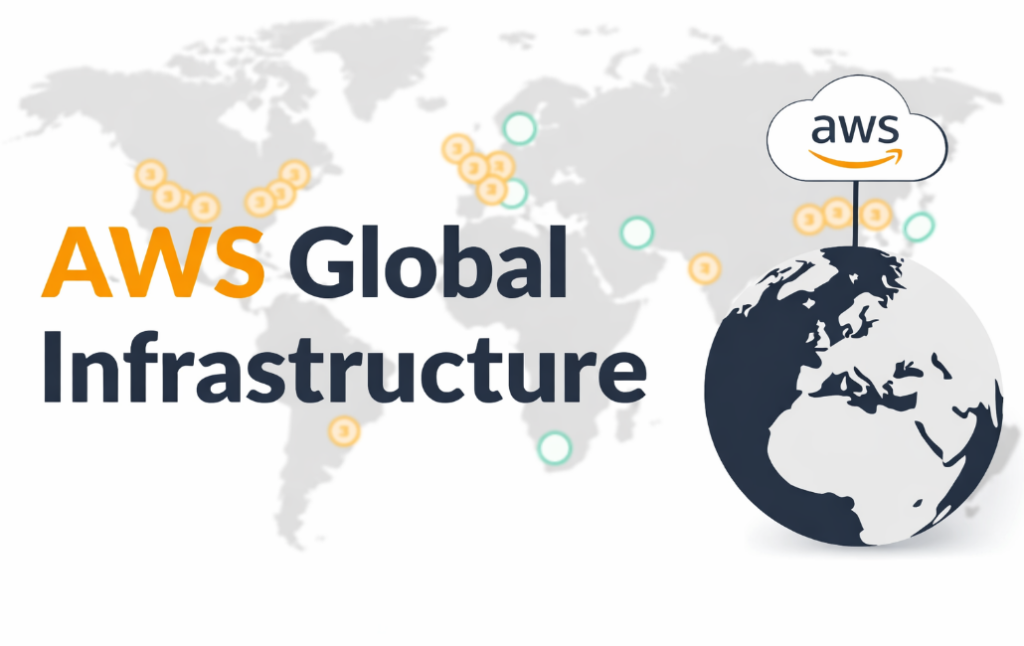
Read our comprehensive guide on AWS Global Infrastructure.
What’s Next?
We’re here to support you! Should you have any questions or need assistance, don’t hesitate to get in touch with us. Contact us at info@uranuscloudsolutions.com and we’ll be happy to help. Your satisfaction is our priority!.