Introduction
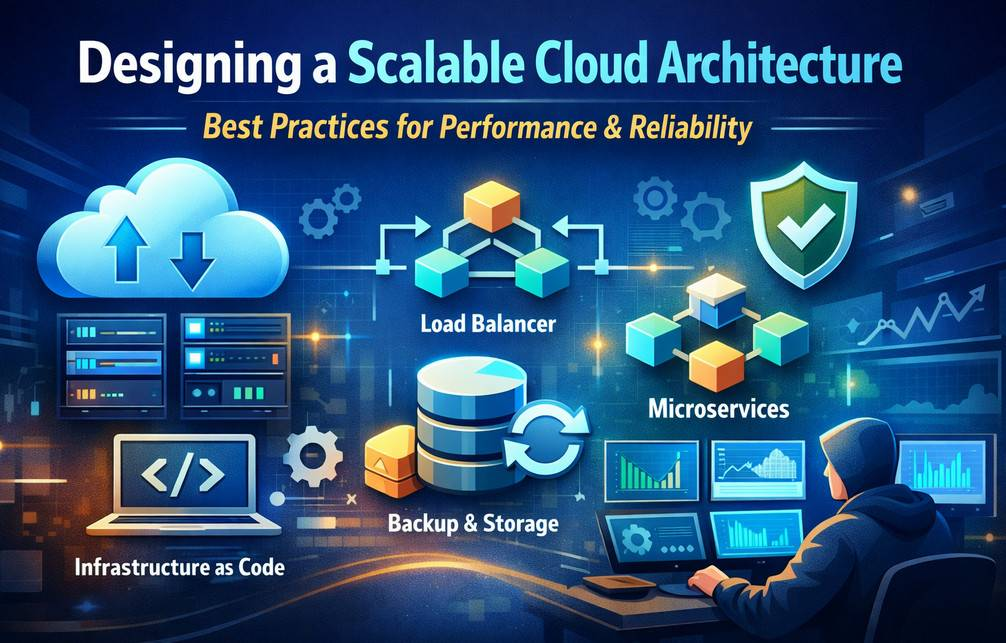
Designing a scalable cloud architecture is essential for businesses that want to grow without performance bottlenecks or unexpected downtime. As workloads increase and user demand fluctuates, cloud systems must scale efficiently while remaining secure, cost effective, and reliable.
In this blog, we’ll explore cloud architecture best practices that help organizations build scalable, resilient, and future ready cloud environments.
What Is Scalable Cloud Architecture?
Scalable cloud architecture refers to designing cloud systems that can automatically adjust resources based on workload demands. This ensures optimal performance during traffic spikes while minimizing costs during low-usage periods.
A well designed scalable cloud architecture supports:
- Business growth without re engineering
- High availability and fault tolerance
- Efficient cost management
Key Principles of Scalable Cloud Architecture
1. Design for Horizontal Scalability
Instead of increasing server size (vertical scaling), add or remove instances dynamically. Horizontal scaling improves resilience and avoids single points of failure.
Best practice:
- Use auto-scaling groups
- Distribute workloads across multiple instances
2. Use Load Balancing
Load balancers distribute traffic evenly across resources, ensuring no single server becomes overloaded.
Benefits include:
- Improved application performance
- High availability
- Seamless handling of traffic spikes
3. Adopt Microservices Architecture
Breaking applications into smaller, independent services allows each component to scale independently.
Why it matters:
- Faster deployments
- Better fault isolation
- Improved scalability and agility
4. Leverage Managed Cloud Services
Managed services such as databases, message queues, and caching services reduce operational overhead and scale automatically.
Examples:
- Managed databases (RDS, Cloud SQL)
- Serverless functions
- Managed Kubernetes services
5. Design for Fault Tolerance and High Availability
Scalable cloud architecture must anticipate failures and recover automatically.
Best practices:
- Deploy across multiple availability zones
- Implement automated backups and disaster recovery
- Use health checks and failover mechanisms
6. Optimize Storage and Data Management
Choose storage services based on access patterns and scalability requirements.
Tips:
- Use object storage for unstructured data
- Implement data lifecycle policies
- Cache frequently accessed data
7. Implement Infrastructure as Code (IaC)
IaC allows consistent, repeatable deployments using tools like Terraform or CloudFormation.
Advantages:
- Faster scaling
- Reduced configuration errors
- Easier environment replication
8. Monitor, Automate, and Optimize Continuously
Scalability is not a one time task. Continuous monitoring helps detect performance issues and optimize resources.
Key metrics to monitor:
- CPU and memory usage
- Application latency
- Cost and resource utilization
Common Mistakes to Avoid
- Over provisioning resources
- Ignoring cost optimization
- Relying on a single region
- Lack of monitoring and alerts
Avoiding these mistakes ensures long-term scalability and stability.
Conclusion
Designing a scalable cloud architecture requires thoughtful planning, automation, and continuous optimization. By following cloud architecture best practices such as horizontal scaling, microservices, load balancing, and automation organizations can build cloud systems that grow seamlessly with business demands.
A scalable cloud architecture not only improves performance but also enhances reliability, security, and cost efficiency.
Check out our detailed blog on Future of Cloud Computing.
What’s Next?
We’re here to support you! Should you have any questions or need assistance, don’t hesitate to get in touch with us. Contact us at info@uranuscloudsolutions.com and we’ll be happy to help. Your satisfaction is our priority!.