Introduction
Cloud computing has transformed the way businesses build, deploy, and scale applications. From startups to large enterprises, organizations rely heavily on cloud platforms to reduce costs, improve flexibility, and accelerate innovation.
However, for beginners, understanding cloud concepts can feel overwhelming mainly because of unfamiliar terminology.
This guide explains the most important cloud computing terminologies every beginner should know, using simple language and practical examples to help you confidently start your cloud journey.
What Is Cloud Computing?
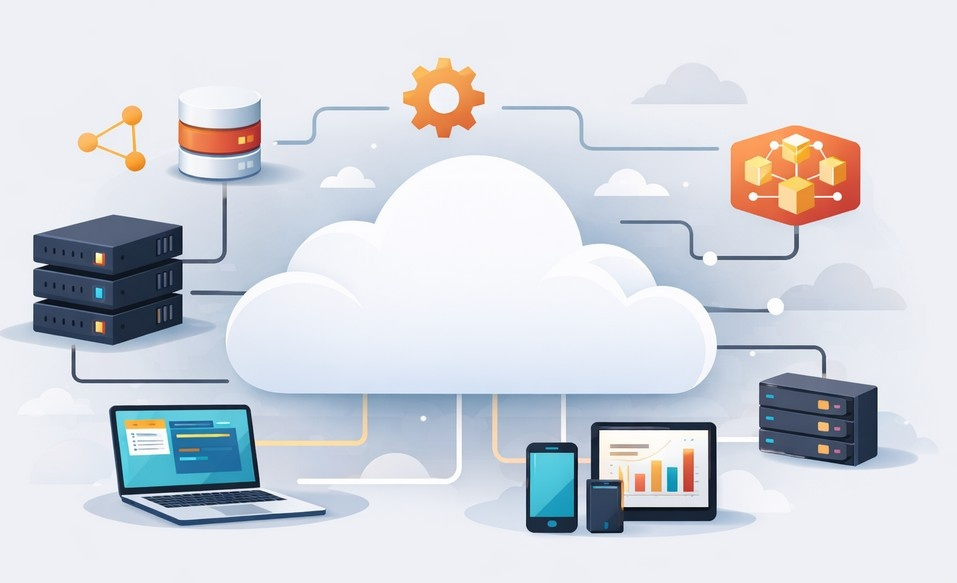
Cloud computing refers to the on demand delivery of computing resources such as servers, storage, databases, networking, and software over the internet. Instead of owning and maintaining physical infrastructure, users can access these resources from cloud providers and pay only for what they use.
Understanding basic cloud computing terminologies makes it easier to navigate cloud platforms, documentation, and real world projects.
Core Cloud Computing Terminologies
Cloud Service Provider (CSP)
A Cloud Service Provider is a company that delivers cloud services and manages the underlying infrastructure. CSPs handle hardware maintenance, security, and availability.
Popular examples:
-
- Amazon Web Services (AWS)
- Microsoft Azure
- Google Cloud Platform (GCP)
Infrastructure as a Service (IaaS)
Infrastructure as a Service (IaaS) provides virtualized computing resources such as virtual machines, storage, and networking over the internet.
Example: Hosting a virtual server instead of buying physical hardware.
IaaS offers maximum flexibility and is widely used for lift and shift workloads.
Platform as a Service (PaaS)
Platform as a Service (PaaS) provides a ready to use environment where developers can build, test, and deploy applications without worrying about servers or operating systems.
Example: Application deployment platforms that manage runtime, middleware, and scaling.
Software as a Service (SaaS)
Software as a Service (SaaS) delivers fully functional software applications over the internet, usually on a subscription basis.
Common SaaS examples include:
-
- Email services
- Collaboration tools
- CRM applications
To understand these concepts in more detail, check out our guide on Cloud Computing Service Models: IaaS vs PaaS vs SaaS Explained, where each model is broken down with real-world examples and use cases.
Cloud Deployment Models
Public Cloud
A public cloud uses shared infrastructure that is accessible to multiple users over the internet. It is cost effective and highly scalable.
Best for:
Startups, development environments, and scalable applications.
Private Cloud
A private cloud is dedicated to a single organization, offering greater control, customization, and security.
Best for:
Enterprises with strict compliance or regulatory requirements.
Hybrid Cloud
A hybrid cloud combines public and private cloud environments, allowing workloads and data to move between them seamlessly.
Best for:
Organizations that need flexibility while keeping sensitive data secure.
Infrastructure and Resource Terminologies
Virtual Machine (VM)
A Virtual Machine is a software based computer that runs an operating system and applications just like a physical server.
VMs allow efficient resource utilization and easy scalability.
Container
Containers package an application along with its dependencies, ensuring consistency across environments.
Key benefit: Faster deployment and portability compared to virtual machines.
Cloud Storage
Cloud storage allows users to store data online instead of on local disks.
Common storage types:
-
- Object storage
- Block storage
- File storage
Networking and Performance Terms
Load Balancer
A load balancer distributes incoming traffic across multiple servers to improve availability and performance.
Scalability
Scalability refers to the ability to increase or decrease resources based on demand.
-
- Vertical scaling: Increasing server size
- Horizontal scaling: Adding more servers
High Availability (HA)
High availability ensures systems remain operational even if one component fails.
Security and Management Terminologies
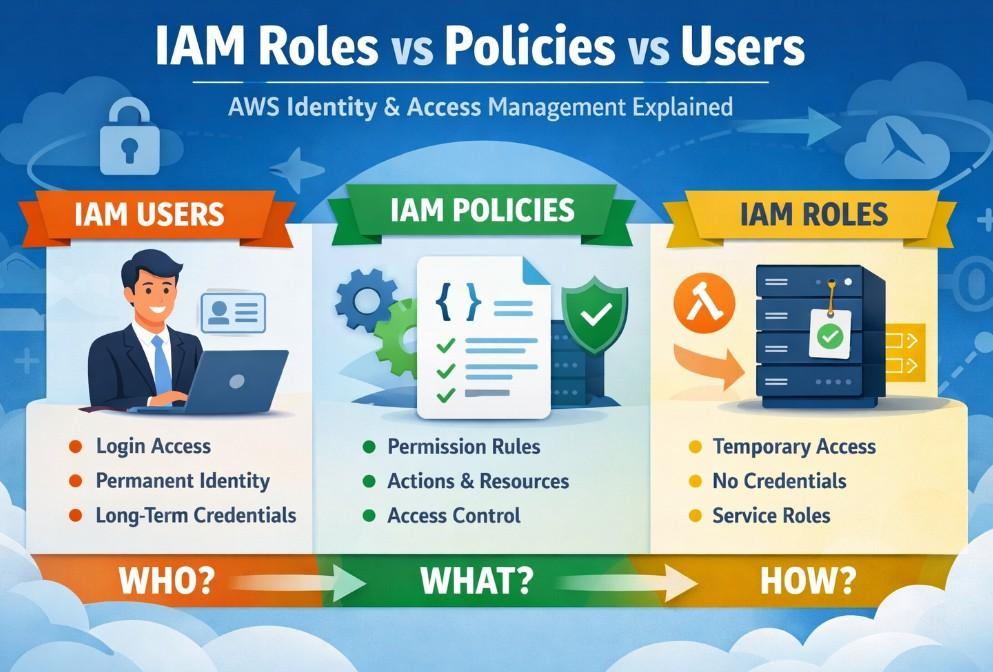
Identity and Access Management (IAM)
Identity and Access Management defines who can access cloud resources and what actions they can perform.
IAM is critical for maintaining security in cloud environments.
Pay As You Go Pricing
This pricing model charges users based on actual resource usage, helping control costs and avoid unnecessary spending.
Why Understanding Cloud Computing Terminologies Matters
Learning cloud computing terminologies every beginner should know helps you:
-
- Communicate effectively with cloud professionals
- Understand cloud documentation and tutorials
- Make informed architectural decisions
- Prepare for cloud certifications and interviews
Conclusion
Mastering cloud computing terminologies is the foundation of a successful cloud learning journey. Once you understand these basics, advanced topics like cloud security, automation, and DevOps become much easier to grasp.
Whether you’re a student, IT professional, or aspiring cloud engineer, building clarity around these terms will help you grow confidently in the cloud ecosystem.
Check out our detailed blog on Designing a Scalable Cloud Architecture.
What’s Next?
We’re here to support you! Should you have any questions or need assistance, don’t hesitate to get in touch with us. Contact us at info@uranuscloudsolutions.com and we’ll be happy to help. Your satisfaction is our priority!.